Get Color - Water Sort Puzzle
Tripledot Studios LimitedPuzzle
4.88.35K Reviews
- Version
- 6.1.0
- Installs
- 50.00M
- Age Rating
- Everyone
Screenshots
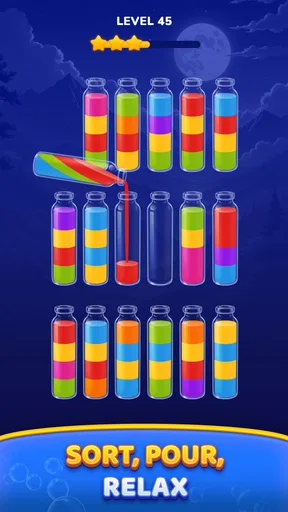
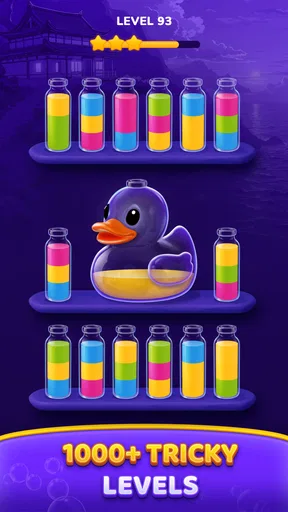
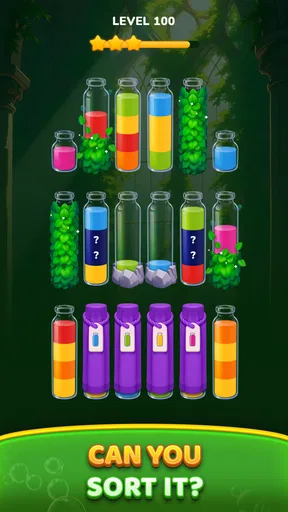
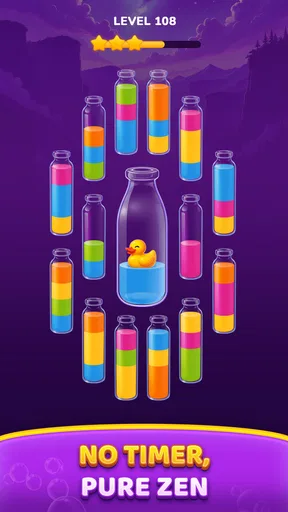
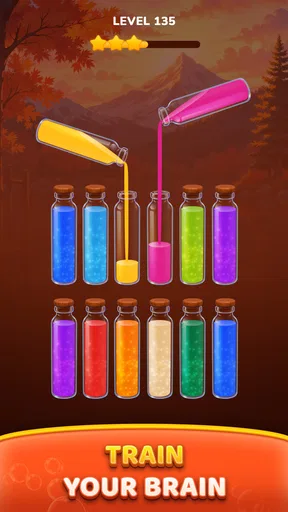
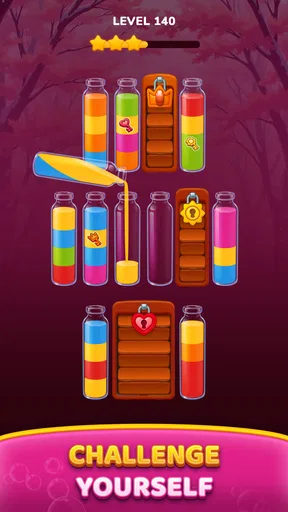
Our Review of Get Color - Water Sort Puzzle
 Analysis by Appyee
I found Get Color - Water Sort Puzzle easy to understand within seconds, but much less easy to master once the bottles become crowded with colors. That contrast is the main reason I kept coming back to it. The basic action is simple: tap one tube, tap another, and transfer liquid when the move is allowed. The real challenge is planning several moves ahead without blocking the space you need later.
My overall view is positive, with one important qualification. This is a strong choice when I want a quiet, focused puzzle that works in short sessions, but it is not the best fit if I need constant novelty, a story, or a more dramatic sense of progress. Tripledot Studios Limited has built a very accessible color-sorting game, and its popularity is understandable: it is free to start, rated for Everyone, and already has more than 50 million installs with an average score of 4.8 from around 553 thousand ratings.
How the water-sorting puzzles feel in real play
The first levels teach the central rule without making a production of it. Each bottle contains layers of colored liquid, and I pour one color into another bottle when the destination has room and either matches the color on top or is empty. The aim is to leave every bottle containing a single color. That sounds almost like a child’s sorting exercise, yet the limited space turns every careless tap into a possible problem.
What makes the game work is the relationship between temporary disorder and final order. I am not simply matching colors as quickly as possible. I am using empty bottles as working space, exposing hidden layers, and deciding whether a move helps the whole puzzle or only looks attractive in the moment. A correct-looking pour can still be a mistake if it buries the color I need next.
The controls are especially well suited to phones. Tapping is more comfortable than dragging for this kind of puzzle because I can select a source and destination without worrying about losing contact with a small bottle. The interaction feels direct, and the rules are visible through the board itself. I rarely need to stop and remember what the game expects from me.
That simplicity also makes the game a useful choice for small breaks. I can play while waiting for a bus, during a coffee break, or for a few minutes before bed without needing to remember a complicated story or control scheme. A level has a clear beginning and end, so it is easy to put the phone down after solving one puzzle instead of being pulled into a long session.
Why planning matters more than fast tapping
The most useful change in my approach was learning to stop treating every available pour as progress. At first, I naturally combined matching colors whenever possible. Later, I started asking what that move would reveal, which bottle would become available, and whether I was preserving an empty space for an emergency.
My practical routine is to inspect the top layer of every bottle before making the first move. I look for colors that can be joined immediately, but I also identify bottles whose upper layers are hiding a useful color. When several moves are possible, I usually prefer the one that opens a bottle or creates a larger uninterrupted stack, rather than the one that merely reduces the number of visible colors.
One less obvious lesson is that an empty bottle is not automatically a spare container. It is a resource. Filling it too early may leave no place to separate a troublesome stack later. I found it helpful to keep at least one open space available whenever the board allows it, especially when several bottles contain mixed layers.
Another useful habit is to avoid completing a color too soon if doing so consumes the only flexible bottle. A finished bottle feels satisfying, but it may also remove the space that makes the rest of the puzzle solvable. In harder arrangements, I sometimes leave a nearly complete color alone until I understand how the remaining layers will move.
Where the design is strongest
The clearest strength is readability. Colors are the main information, and the bottles make the state of the puzzle easy to scan. I do not have to interpret a map, memorize symbols, or follow a sequence of instructions. The visual language is immediate enough for casual players, while the arrangement of layers gives experienced puzzle fans something to think about.
The game also handles the familiar “one more level” feeling well. Solving a board gives a small sense of closure, and the next challenge is available without a large amount of setup. This makes the experience more approachable than many logic games that require a long commitment before the interesting part begins.
I also appreciate that the challenge comes from the puzzle layout rather than from reflexes. There is no need to tap rapidly or react to a timer in the basic sorting task. That makes it suitable for players who enjoy methodical thinking and for people who find action-oriented mobile games tiring.
For younger players, the straightforward objective and Everyone age rating make the concept approachable. I would still treat it as a thinking game rather than an educational tool. It can encourage sequencing, visual grouping, and patience, but its main purpose is relaxation and puzzle solving, not structured learning.
The friction that affects the experience
The same focused simplicity that makes the game approachable can eventually become repetitive. Once I understood the sorting logic, the visual presentation did not always provide enough variety to make every new board feel dramatically different. The satisfaction depends heavily on whether the arrangement itself gives me an interesting problem.
Players who want a strong narrative, character development, or a large collection of distinct mechanics may find the experience narrow. Compared with match-three games, it has less spectacle and fewer moment-to-moment surprises. Compared with crossword or word puzzles, it offers no language challenge. Compared with a traditional Sudoku app, it is more tactile and visual but can feel less intellectually varied over a long session.
There is also a psychological trap in the undo-and-retry style of play common to this kind of puzzle. When I make a poor move, I can be tempted to keep experimenting randomly instead of analyzing the board. That approach sometimes works, but it weakens the logic that makes the game satisfying. I get more from it when I pause, reconstruct the order of the layers, and restart with a plan rather than tapping through possibilities.
The free model deserves attention as well. The game is free to download, but in-app purchases range from $0.99 to $119.99 per item. That broad range means I would approach optional purchases carefully, particularly if I were handing the phone to a child. The core appeal is the sorting itself, so I would not assume that spending money is necessary to enjoy the puzzles.
Another practical point is compatibility. The current version is 6.1.0 and requires Android 7.1 or later. That covers many devices, but owners of older phones should check their system before planning around it. On a supported phone, this is the kind of game I would expect to fit naturally into a casual mobile routine rather than demand specialized hardware.
Who will get the most from it
I would recommend it first to people who like tidy, self-contained logic problems. If you enjoy arranging objects, spotting patterns, and correcting a plan after a mistake, the water-and-bottle theme gives those familiar ideas a pleasant physical form. It is also a good match for anyone who wants a puzzle that can be played silently and stopped at almost any point.
It works particularly well for a divided day. Imagine waiting for an appointment with only ten minutes available. I can open the game, study one board, make deliberate moves, and either finish it or leave it without losing the thread of a larger campaign. That is more convenient than starting a narrative game that expects sustained attention or a competitive game that punishes interruption.
I would also suggest it to casual players who normally avoid puzzle games because they seem intimidating. The rules are much easier to grasp than those of many number-placement or strategy titles. The difficulty comes gradually from the arrangement of colors, not from a long tutorial or specialist vocabulary.
It is less suitable for someone who needs social competition, daily events, a story, or a sense of collecting meaningful characters and equipment. It may also disappoint players who want every level to introduce a new rule. For those tastes, a broader puzzle collection or a story-driven brain game would probably offer more variety.
People who are easily frustrated by irreversible-looking decisions should play slowly. My best advice is to treat the opening moves as reconnaissance. Before committing to a large pour, check whether it exposes a color, preserves an empty bottle, or creates a useful stack. If it does none of those things, it may be better to wait and examine another option.
Small strategies that make difficult boards clearer
Start by locating the most buried colors. A top layer that blocks several different colors deserves attention, even if it is not the easiest color to match. Opening the right bottle can create more options than completing a visible pair.
Use empty bottles as temporary workbenches, not permanent storage. Before filling one, decide what job it is doing: collecting a color, separating a stack, or exposing a hidden layer. This prevents the common mistake of losing flexibility too early.
When two pours appear equally good, choose the one that reduces future congestion. A move that leaves fewer mixed bottles is often more valuable than one that creates a completed bottle while making the remaining board harder to access.
If the board becomes confusing, stop looking only at the colors and count the layers mentally. Thinking in terms of which layer will be exposed next makes the puzzle feel more like planning than guessing.
These habits do not turn every board into an effortless exercise, but they change the experience. I make fewer random moves, recognize dead ends earlier, and get more satisfaction from solving a puzzle through reasoning. They also explain why the game can remain engaging after the basic rule has become familiar: the challenge shifts from understanding the mechanic to managing space and sequence.
How it compares with other puzzle choices
Against match-three games, this one is calmer and more deliberate. Match-three titles often reward quick pattern recognition and chain reactions, while this game rewards restraint. I would choose the water-sorting format when I want to think without pressure, and a match-three game when I want brighter feedback and faster momentum.
Against Sudoku, the comparison is more balanced. Sudoku offers a deeper number-based deduction system and can provide a stronger long-term challenge for players who enjoy formal logic. The bottle puzzles are more visual, easier to learn, and more forgiving as a casual activity. If numbers feel like work, the colored layers may be a friendlier entry point.
Against word puzzles, the deciding factor is whether I want language or spatial organization. This game avoids vocabulary, spelling, and cultural knowledge, so it is accessible in a different way. A word game is the better alternative when I want to exercise recall or language skills; this is better when I want to arrange visible information with minimal reading.
Its main advantage over many larger puzzle games is focus. There is one central idea, and the controls support it cleanly. Its main disadvantage is the same narrow scope: players looking for a wide range of puzzle types will eventually need another app alongside it.
My verdict after weighing the trade-offs
Get Color - Water Sort Puzzle succeeds because it turns a very small rule set into a surprisingly thoughtful spatial problem. I like that I can understand the game immediately but still improve my approach over time. The strongest moments come when a board looks stuck, I preserve the right empty bottle, and a carefully chosen sequence opens the whole arrangement.
I would not call it endlessly varied, and I would keep the purchase model in mind before recommending it for unsupervised child use. Players seeking story, competition, or constantly changing mechanics should look elsewhere. Even so, those are limitations of fit rather than failures of execution.
For a free puzzle game from Tripledot Studios Limited, it offers a polished, approachable way to spend a few quiet minutes. Its Everyone rating, broad device support from Android 7.1 onward, and large player base make it an easy title to try. My recommendation is simple: install it if you want calm, visual logic with short sessions, but skip it if repetition bothers you more than simplicity relaxes you.
In my experience, the best way to enjoy it is not to rush toward the next board. Treat each bottle as part of a limited workspace, protect your empty space, and think one exposed layer beyond the move in front of you. That is where this modest-looking puzzle becomes genuinely rewarding.
Verdict
Strengths of Get Color - Water Sort Puzzle
- Simple tap controls make the game easy to learn immediately.
- Short levels are convenient for quick breaks or casual play.
- Sorting mechanics provide a satisfying sense of visual progress.
- Playable offline, making it useful when no internet is available.
- Bright colors and clean visuals are easy to follow on small screens.
Limitations of Get Color - Water Sort Puzzle
- Later puzzles can feel repetitive once the core sorting pattern is familiar.
- Some levels may require restarting after a single poor move.
- Hints or extra assistance may be limited or tied to advertisements.
- Frequent ads can interrupt the flow between completed puzzles.
- The game offers little variety beyond its main water-sorting mechanic.
Other Releases by Tripledot Studios Limited
View All
Woodoku - Wood Block Puzzle
Puzzle4.2


Nut Sort: Color Sorting Game
Puzzle4.8

Car Out! Traffic Parking Games
Puzzle4.7
Similar Picks in This Category
View All
Block Blast!
HungryStudio4.8

Braindom: Brain Games Test
Lahana Game Studio4.6

AMAZE!
CrazyLabs LTD4.6

Sudoku - Classic Sudoku Puzzle
Oakever Games4.7

Art Puzzle - Puzzle Games
Easybrain4.8

Amaze GO!
Oakever Games4.9
Frequently Asked Questions
What is Get Color - Water Sort Puzzle?
Get Color - Water Sort Puzzle is a casual logic game in which you organize colored liquid inside bottles or tubes. Your objective is to pour liquid from one container to another until every container holds only one color. The rules are simple, but later stages require careful planning, because an incorrect move can block useful spaces and force you to restart the level.
How do you play Get Color - Water Sort Puzzle?
To play, tap a bottle to select it and then tap another bottle to pour the liquid. You can usually pour only when the destination has enough room and its top color matches the liquid being moved, or when the destination is empty. The best strategy is to expose hidden colors gradually, preserve empty containers, and think several moves ahead before committing to a pour.
Does Get Color - Water Sort Puzzle work offline?
The main sorting puzzles can generally be played without a continuous internet connection, which makes the game suitable for short sessions while traveling or when mobile data is unavailable. However, optional features such as advertisements, rewards, cloud-related services, analytics, or promotional content may require internet access. Availability can also depend on the version installed and the device’s connection settings.
Is Get Color - Water Sort Puzzle free to download and play?
Get Color - Water Sort Puzzle is typically offered as a free download, allowing players to access its basic puzzle content without paying upfront. Like many free-to-play casual games, it may include advertisements, optional purchases, or paid tools such as hints, extra moves, or ad removal. Before downloading, review the store listing and in-app purchase information, especially if children use the device.
Is Get Color - Water Sort Puzzle suitable for children and beginners?
The game is easy to understand and does not require fast reflexes, complicated controls, or previous puzzle experience, so it can be suitable for beginners and many younger players. Nevertheless, difficulty increases as more colors and containers appear. Parents should check the listed age rating, advertising content, and purchase settings, since the exact experience may vary between Android and iOS versions.
Play our best games!


